A walk can be the one part of the day when nothing asks you to answer, choose, or keep up. Yet many of us fill it before we reach the end of the driveway. A podcast begins, a playlist follows, and the trip becomes another slot for information. There is nothing wrong with listening while you move. Walking without headphones is simply a different experiment: what becomes noticeable when you leave that slot open?
You do not need a nature trail, perfect weather, or a vow of silence. Start with a safe, familiar route and a short period of unfilled attention. The value is in discovering which version of walking you want at a particular moment.
First, separate movement from media
Music can change the feel of a commute. A podcast can make a repetitive route enjoyable. If audio helps you get outside at all, that counts. The question is whether every walk must carry a second activity. Sometimes the desired outcome is movement; sometimes it is learning; sometimes it is letting the mind settle. Choosing deliberately keeps one default from doing all three jobs.
A walk without headphones can be especially useful when you feel saturated by voices, after a demanding work session, or when you want to notice a place. It can be unhelpful when silence feels isolating, the route is unpleasant, or you need audio for regulation or accessibility. There is no universal right setting.
What you may notice
At first you may notice your own impulse to reach for the phone. You might also hear traffic, birds, a conversation, wind, construction, or your footsteps. A familiar street may have changing light, shop windows, and small signs of the season. These observations are ordinary. Their value is that they are yours, in the place you actually occupy.
This is not proof that silence repairs attention or that headphones damage it. Research on natural environments and cognition is more specific. In experiments, Berman and colleagues found improved performance on selected attention tasks after a nature walk or viewing nature images compared with urban conditions. The study tested particular tasks and settings; it did not compare headphones with no headphones. Treat an audio-free walk as a personal experiment, not a prescribed cognitive treatment.
Walking itself may also change thinking. Four experiments by Oppezzo and Schwartz found better performance on certain creative idea-generation tasks while walking and briefly afterward, but not on every kind of task. If a solution comes to you on a walk, that is welcome. Do not make idea production another obligation.
Try the ten-minute version
Choose a route where you can walk comfortably and safely. Before leaving, decide how the phone will be used: perhaps it stays in your pocket for emergency contact and the map is checked at a junction. Silence nonessential notifications. Walk for ten minutes without audio, then decide whether to continue, put on music, or head home.
- Minute 1–2: notice the pace of your steps and the sounds closest to you.
- Minute 3–5: look farther ahead and identify three details you had missed before.
- Minute 6–8: let thoughts arise without turning every one into a task.
- Minute 9–10: ask what you want from the rest of the walk.
This is a prompt, not a scorecard. Do not close your eyes, tune out vehicles, or become so absorbed that you miss your surroundings. If you use mobility aids or have hearing or sensory needs, adapt the exercise around those needs. An accessible, seated visit to an outdoor space can offer the same chance to observe.
Let safety set the rules
Awareness matters near crossings, cyclists, and traffic. But removing headphones does not automatically make a route safe, and wearing them does not automatically make it unsafe. Use the route and your needs to decide. For an unfamiliar hike, check current conditions and carry appropriate essentials. The National Park Service recommends route planning, a turnaround time, and telling someone where you are going. Keep a working phone or other emergency communication tool when circumstances call for it.
You can choose a park bench, a quiet courtyard, or an indoor walking route if your neighborhood lacks a safe pedestrian option. Offline life should be available to people who cannot take an idyllic trail walk. The important part is giving your attention a break from incoming content, in a setting you can use safely.
When the quiet feels uncomfortable
Silence may reveal boredom, worry, or a to-do list. You do not need to suppress any of them. Name what is there, then return attention to the route. If you find that unstructured quiet intensifies distress, choose a companion, gentler audio, or a shorter interval. A self-guided walk is not a substitute for care when anxiety or other symptoms are interfering with daily life.
It can help to begin with a destination: a shop, library, mailbox, or coffee with a friend. Having a purpose removes the pressure to “have a mindful experience.” The walk is simply part of getting there.
A few ways to keep it interesting
- Take a familiar route in reverse and notice what changes.
- Choose one sense—sound, temperature, or texture—and observe it for a block.
- Walk to a small errand rather than driving, where that is practical.
- Invite a friend and leave room for conversation without a shared audio track.
- Carry a paper notebook and jot one observation at the end, not during every step.
- Try an audio-free first half and a favorite playlist on the return.
If you want a more destination-focused outing, see our beginner’s offline adventure guide. If what you want is a broader routine, an offline morning can give the walk a dependable place in the day.
How to make the habit sustainable
Pick one recurring walk and make only its first ten minutes audio-free. A fixed, small occasion is easier to remember than a broad rule about using headphones less. Prepare the route before stepping outside, allow any essential calls through your phone settings, and choose a sheltered alternative when conditions change. The setup should make the walk easier, not create another decision.
After a few repetitions, ask what changed. Did you notice the neighborhood, or mostly think about work? Did the quiet feel welcome, or did traffic make the walk unpleasant? Those answers may suggest a different route, time, or purpose. They are more useful than a generic rule that silence is always restorative.
Walking with someone or toward something
An audio-free walk can make room for a friend without requiring a nonstop conversation. Agree that pauses are fine. If you walk with a child, ask what they notice and let them lead a short section. A destination can also help: a library, market, or park bench gives the walk a purpose while leaving the route open for observation.
You can split the outing: quiet on the way there and music on the return. This makes the experiment a choice rather than an identity. People often keep practices that can bend around weather, mood, and time.
When audio is the better choice
Some people use familiar sound to manage sensory overload in a noisy place. Others look forward to a podcast on a long commute. If taking audio away makes you less likely to walk, keep it. Try a shorter quiet interval in a calmer place, or skip the experiment. If you use headphones near roads, choose a setup that suits your safety needs and stay attentive at crossings.
Do not force yourself onto an unsafe route to complete an attention exercise. Choose a public indoor walking space, a companion, or a seated outdoor visit. The same principle applies if silence makes distress more intense: there is no value in treating discomfort as a test of character.
A one-minute reflection
After each walk, write three fragments: where you went, one thing you noticed, and what you would change. After three outings you may discover a personal rule such as “quiet in the park, music on the bus.” A rule built from your experience is more likely to fit than an all-day ban.
A walk can also mark a transition between work and home. A few unfilled minutes may help you notice that one part of the day is ending. This is a possible use, not a guaranteed mental-health effect. Keep the practice flexible.
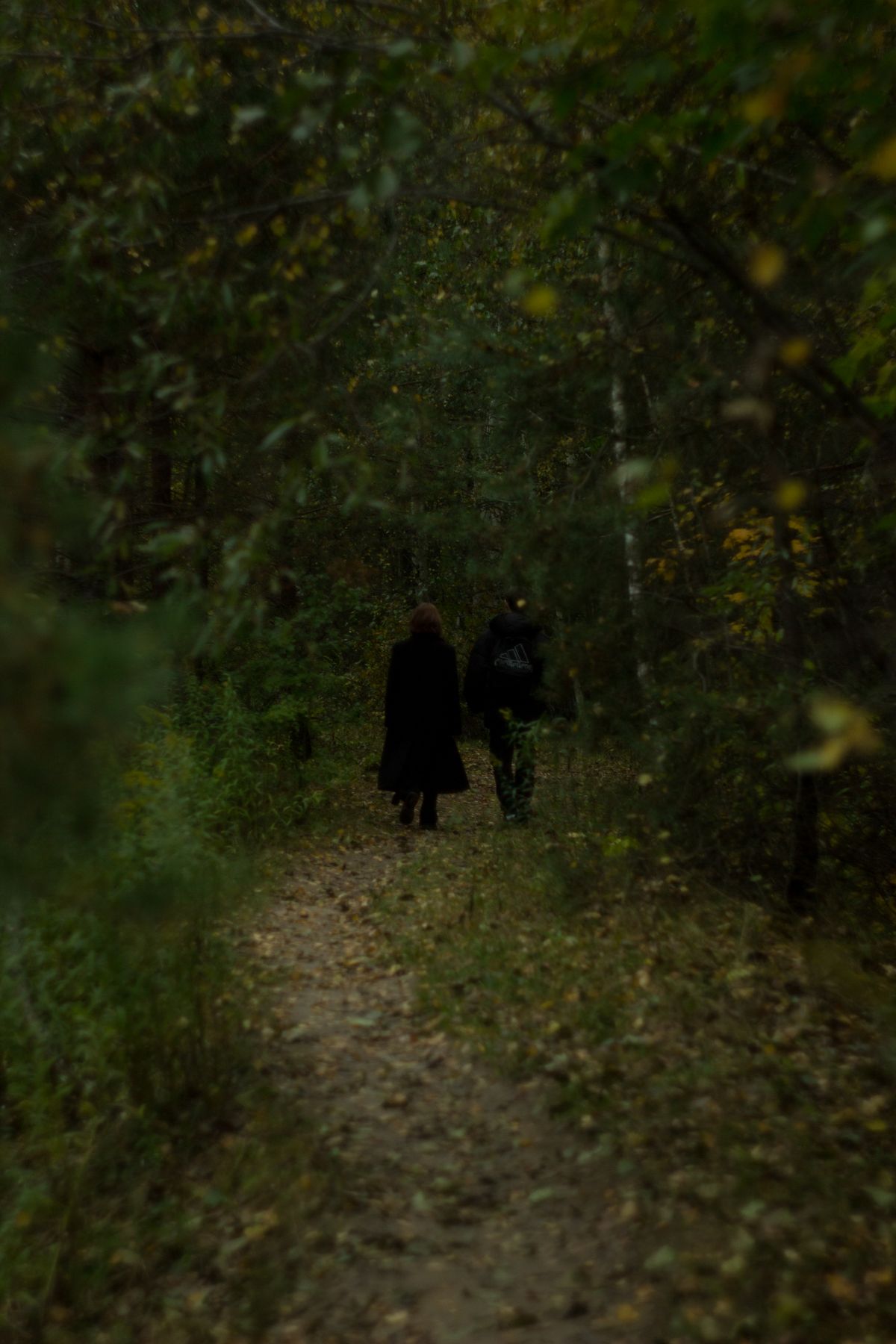
A few real-world versions of the walk
Between meetings: Walk around the block before the next call. Leave the headphones at your desk and keep the phone available for urgent messages. Notice the change from indoor sound to outdoor sound, then return with one clear next task in mind. This is a transition, not a test of how long you can avoid media.
After dinner: Choose a familiar, well-lit route and decide before leaving whether you want conversation, music, or quiet. If you go with someone, make room for pauses instead of filling every step with talk. If your neighborhood is unsafe after dark, use a daytime break or a safe indoor route. The idea should bend to your surroundings.
On a commute: If part of your commute is walkable, try one segment without audio. You might notice where a crossing is difficult, a storefront has changed, or the day feels unusually noisy. That observation does not have to become a profound insight. It is enough to arrive knowing more about the route you actually took.
Questions people often ask
Do I have to leave my phone behind? No. Carry it when navigation, accessibility, work, caregiving, or safety requires it. The experiment is about what occupies your attention during the walk, not about proving that you can be disconnected. You can decide to check once at a planned point and then put it away again.
What if I need music to make walking enjoyable? Use music. The most useful version may be a quiet first ten minutes followed by your favorite playlist. If audio helps you keep a healthy movement habit, that benefit matters. The question is whether listening is a choice you still enjoy or a default you have stopped noticing.
Is silence supposed to improve my focus? There is no guarantee. Studies on walking and natural environments investigate particular tasks and populations; they cannot tell you how every walk will feel. Traffic noise, fatigue, worry, and the quality of the route also matter. Treat your own experience as information about preference, while keeping research claims separate from personal impressions.
What if quiet makes me anxious? Choose a setting where you feel comfortable, keep the trial brief, or listen to something soothing. If distress persists or interferes with daily life, speak with a qualified professional. An optional attention experiment is never a reason to push through distress.
A small rule can keep the experiment simple: choose the route before you choose the soundtrack. If the street is loud or you need turn-by-turn directions, use what helps you move safely. If the route is familiar, try leaving the first few minutes open. You can make a different choice on the next walk. That flexibility is the point of the exercise.
What the experiment can tell you
After a few attempts, ask whether the quiet helped you feel more aware of the route, gave you space to think, or simply felt unpleasant. Any answer is useful. You may learn that you like silence on short walks and music on long ones. You may prefer an audio-free park visit to a noisy roadside. The goal is a choice that fits your life.
If it is hard to start because the phone fills every small gap, the free 10-Minute Phone Urge Reset offers a brief printable pause you can try before leaving. You do not have to become a person who never uses headphones. Try one walk with no soundtrack and see what the place gives back.