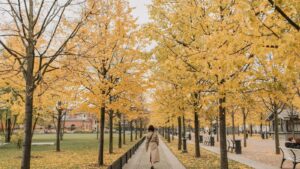
The claim that nature “restores attention” is appealing, especially after a day of tabs, messages, and meetings. It is also easy to overstate. Researchers have found promising short-term changes in some attention tasks after exposure to natural settings. The size, consistency, and real-world meaning of those changes are still being studied. A walk in a park can be worth taking without promising that trees will fix your brain.
Here is what the research actually tests, where it is strongest, and how to use it to plan a modest break from the screen.
What attention restoration theory proposes
Attention restoration theory suggests that demanding tasks draw on effortful, directed attention. Some environments hold interest more gently, allowing that effortful system a different kind of demand. Natural settings may offer this “soft fascination”: moving water, leaves, or light can attract attention without requiring a constant decision. This is a theory about how environments may affect attention, not proof that every green space produces a reliable benefit.
One influential experiment by Berman, Jonides, and Kaplan compared interactions with natural and urban environments and found improvements on selected directed-attention measures after nature exposure. It helped establish a plausible effect, but a single research program cannot settle questions about dosage, who benefits, or how long changes last.
What later evidence adds
A 2025 systematic review and meta-analysis examined nature exposure and attention outcomes, including whether duration changes the results. Reviews bring studies together, but the underlying studies vary in their settings, tasks, participants, and comparison conditions. An average effect does not mean every person will notice an immediate difference after every visit.
Another experiment with 50 participants compared walking and sitting outdoors. Both groups improved on the tested cognitive measures and the difference between walking and sitting was not significant. That is an important practical point: a person who cannot or does not want to walk may still find value in an outdoor visit. The small study cannot establish a universal rule, but it challenges the idea that a demanding hike is required.
Two field studies of nature walks found improvements in self-reported mood and restoration, while additional psychological tasks did not reliably improve those feelings. Sustained attention findings varied by condition and participant context. The evidence is more nuanced than a slogan about a fixed number of minutes outdoors.
What the studies do not show
- They do not establish that a park visit treats ADHD, anxiety, depression, or burnout.
- They do not prove that all urban spaces are harmful or that all natural spaces are restorative.
- They do not isolate the effect of being away from a phone in every study; movement, expectations, company, daylight, and noise may matter.
- They do not tell you that a particular duration will work for everyone.
- They do not require you to live near a forest to take a useful break.
A study may find an association between green space exposure and well-being, but people who have access to those spaces can differ in many other ways. Experiments reduce some of that uncertainty, yet often test a narrow task over a short period. We should keep the practical advice proportionate to the evidence.
Design a small personal experiment
Choose two ordinary breaks of similar length on different days. On one, remain indoors or use your usual break. On the other, visit an accessible outdoor place: a tree-lined street, courtyard, garden, or park. Before and after, make a quick note of how mentally tired you feel and whether it is easier to return to a task. Keep the notes descriptive. This is not a diagnostic test or a way to measure your cognitive capacity precisely.
If weather, safety, mobility, or air quality make an outdoor visit difficult, adapt. Sit near a window, visit an indoor garden, or look at nature images. The original Berman study included a nature-image condition, though viewing images is not the same as being outside. A substitute may still be pleasant and workable.
Try leaving your phone in a pocket during part of the break. A laboratory study by Stothart and colleagues found that notifications alone disrupted attention task performance. This does not mean a phone cancels a nature visit. It gives a reason to reduce unrelated alerts so you can test the setting itself.
A five-step outdoor break
- Choose a place that is easy to reach and feels safe.
- Set a return time that fits your day rather than waiting for a perfect free afternoon.
- Use your phone for directions or safety if needed, and silence nonessential alerts.
- Notice one feature that changes: light, wind, water, birds, or other people using the space.
- Return and ask whether the break made the next part of your day easier, no different, or harder.
If you want to combine the break with movement, the CDC says some physical activity is better than none and that brisk walking can contribute to weekly activity goals. Those are general physical-activity benefits; they should not be confused with a proven attention-restoration dose. Walking slowly or sitting outside may suit your purpose better on a tired day.
Access matters
A recommendation to “get into nature” can sound detached from crowded neighborhoods, disability, work schedules, heat, and transportation costs. A useful approach starts with what is nearby and available. A public courtyard, shaded bus stop, community garden, or a few trees on a familiar route may be realistic. Research does not require that you turn a break into a costly trip.
If you are choosing a new route, check accessibility information and current conditions. Our offline adventure planning guide helps with simple routes and safety. For a quiet walk, try a short walk without headphones and see what you notice. The route and your needs decide whether audio belongs on that walk.
Why study results can disagree
Researchers use different meanings of “nature.” A quiet garden, a managed city park, a forest trail, a photograph, and a virtual scene do not provide the same experience. The comparison setting matters too. A busy traffic corridor is a different control condition from a pleasant urban plaza. If the natural setting is simply quieter or more comfortable, the observed difference may not come from greenery alone.
The tasks used to measure attention also vary. Remembering a string of numbers, responding to a visual cue, and staying focused on a routine work project are related but not interchangeable. A measurable change on a laboratory task may be too small to notice in daily life. Conversely, someone may feel better after a break without performing differently on a test. Both outcomes deserve honest reporting.
Participant expectations can shape self-reported restoration. Many people already believe parks are relaxing, and researchers cannot always hide which environment a person is visiting. Experimental designs still add value by comparing conditions, but they do not remove every source of uncertainty. This is why a careful article says “may help” and describes the tested outcome.
Does the break need to be completely screen-free?
No study cited here establishes that a map check or necessary message erases the effects of an outdoor visit. The practical question is whether the screen directs your attention away from the setting for most of the break. A quick route check can support access. An endless feed changes the activity you are doing. Decide which phone tasks belong to the outing before leaving.
You can also try two versions of the same nearby route: one with your usual audio and phone habits, another with notifications quiet and fewer checks. Your notes may show that location matters more than the device, or that a quieter phone makes it easier to enjoy the place. This is a personal comparison, not a controlled scientific experiment.
What to do when nature is not available
Access to green space is uneven. Work schedules, disability, weather, air quality, safety, and travel costs can all limit options. Do not turn a research finding into an instruction that ignores these conditions. A brief view of trees through a window, a community garden on a bus route, or a calmer indoor break may be more realistic than a distant hike.
The broader lesson may be to give directed attention a change in demand. For some people, that comes from a natural setting; for others, from conversation, a craft, or simply sitting somewhere less demanding. Those alternatives need their own research and cannot be assumed equivalent. They are worth testing as practical options when an outdoor break is unavailable.
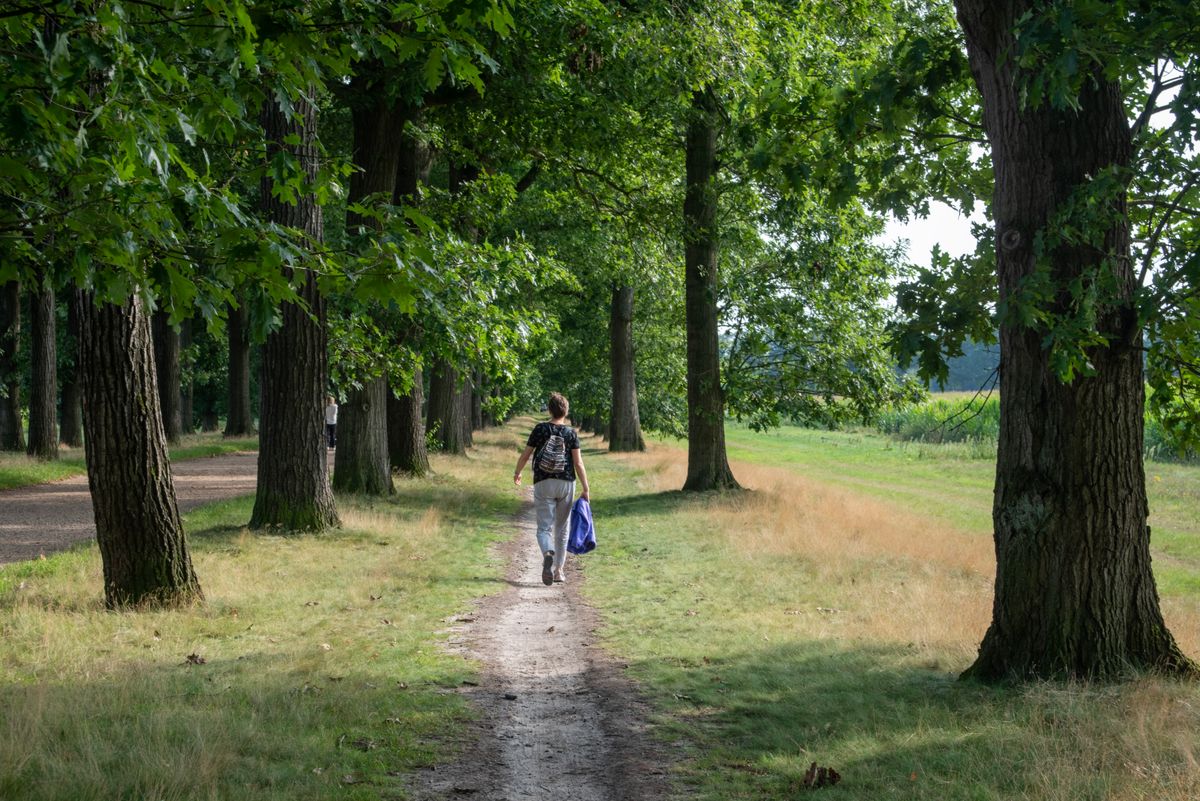
Three ways to make an outdoor break easier to repeat
Attach it to an existing transition. A short walk after lunch, a few minutes outdoors before starting work, or a stop at a public garden on the way home needs less planning than a separate trip. It also makes the break easier to compare from one day to the next. If you want to notice a change, choose roughly similar times and tasks rather than comparing a calm weekend with a hectic workday.
Choose a place that feels safe and inviting. “Nature” in research can mean many things, and the exact setting matters to an individual. A tree-lined street may be more practical than a distant trail. A quiet courtyard may feel better than a crowded park. Accessibility, weather, air quality, transportation, and personal safety affect the experience. A theoretically ideal setting that you cannot reach rarely helps you build a habit.
Decide what the phone is for. Bring it if you need it. Before stepping outside, choose whether you will use it for directions, a photo, a message, or nothing until you return. That decision reduces the chance that a useful check turns into an unrelated feed. If your work requires availability, a short break with notifications for one contact still counts as time outdoors.
How to interpret your own results
Imagine that you take a ten-minute walk in a nearby park and find the next work task easier. The walk may have helped, but so may the physical movement, a pause from the task, a change of scenery, or a better mood. You cannot isolate one cause from a single personal experience. You can still use that experience to make a practical decision: this type of break seems worth repeating.
If nothing changes, the experiment is not a failure. You may need rest rather than a walk, or a quieter place, or a longer break. A person managing chronic pain or limited mobility may prefer sitting where they can see trees, tending a plant, or looking through a window. The point is to find an accessible source of respite, not to reenact a study protocol.
Research also invites a more modest conclusion than many headlines suggest. A study can show an average group difference on a defined attention task without proving that every participant felt restored or that the effect lasted all day. Reviews combine studies with different settings, measures, and methods. That is why the responsible claim is that nature exposure may support some aspects of attention under some conditions, while the size and reliability of the benefit remain open questions.
For most readers, the useful question is simple: does spending a little time in a pleasant outdoor setting make the next part of your day easier to enter? Try it when feasible, observe honestly, and keep the phone as a tool for the tasks that actually need it.
A realistic conclusion
Nature exposure may help some aspects of attention in some circumstances, and many people value the experience for reasons that do not need a cognitive score. The evidence does not support a medical promise or a precise recipe. If a modest outdoor break leaves you more ready for the next task, it is worth making room for it. If it does not, adjust the place, duration, or type of break without treating that as a personal failure.
For a structured way to test small screen boundaries alongside outdoor time, the 7-Day Unplugged Reset offers a printable experiment. It can help you notice patterns while keeping your phone available for useful tasks. More ideas are in Offline Adventures.