Artificial intelligence is often described as if it lives nowhere. We call it “the cloud,” ask a question and receive an answer from an interface that appears weightless. The machinery stays out of sight.
But the cloud has a zip code.
Every AI response depends on physical equipment housed in buildings, connected to transmission lines, cooled by engineered systems and supplied by regional grids. Those facilities employ people, consume resources and affect communities. At the same time, AI is entering workplaces, classrooms, search results, customer service, creative work and private conversations. It is reasonable that people are worried.
The difficulty is that “AI fear” now names several different concerns at once. A person can be worried about losing a job, surrendering judgment, exposing private information, encountering convincing falsehoods and living near a proposed data center—all before deciding whether to use a chatbot for dinner ideas.
This article separates those fears. Not to dismiss them, and not to convert a public infrastructure debate into another self-care assignment. The goal is to replace one shapeless feeling with questions that can actually be investigated.
AI fear is not one fear
Public conversation becomes confusing when concerns that operate at different scales are collapsed into the same argument. It helps to separate at least five categories.
- Livelihood: Will AI remove tasks, reduce entry-level opportunities, change wages or make a profession harder to enter?
- Agency: Will people lose skills, judgment or the willingness to do difficult thinking themselves?
- Truth and trust: Will synthetic media, impersonation and confident errors make it harder to know what is real?
- Privacy and power: What happens to information entered into AI systems, and who gets to decide how these tools are deployed?
- Physical infrastructure: How will data-center construction affect electricity, water, land, noise, taxes and local planning?
These questions require different evidence and different responses. Learning a new work tool does not resolve a water dispute. Deleting an AI app does not create grid transparency. A community zoning hearing cannot decide how much of your own writing you want to delegate.
Anxiety rises when every headline appears to demand an individual answer to a system-level question. Clarity begins by assigning each concern to its proper scale.
What people say they are afraid of
Concern about AI is not a fringe response. A 2026 Pew Research Center survey of 5,119 U.S. adults found that roughly seven in ten expected increased AI use to make personal information less secure. Pew also reported low confidence in both government regulation and responsible corporate development.
Earlier Pew research found concern about inaccurate information, impersonation, data misuse, bias, job loss and reduced human connection. Public concern and expert concern did not line up perfectly. That is not proof that experts are correct and the public is confused. Experts and members of the public may have different exposure to benefits, risks, institutions and consequences.
Survey results describe what respondents reported at a particular time. They do not establish that AI has already caused every feared outcome. They do show why generic reassurance—“people worried about every new technology”—is inadequate.
Translate the fear into a question
Instead of: “AI is going to take everything.”
Ask: Which tasks in my work are being automated, which are being augmented, and who controls the transition?
Instead of: “AI is destroying the environment.”
Ask: What electricity and water will a specific facility use, under what conditions, and who bears the cost?
Instead of: “Nothing online is real anymore.”
Ask: Which decisions require source verification, identity confirmation or an offline channel?
The data center is where the metaphor becomes physical
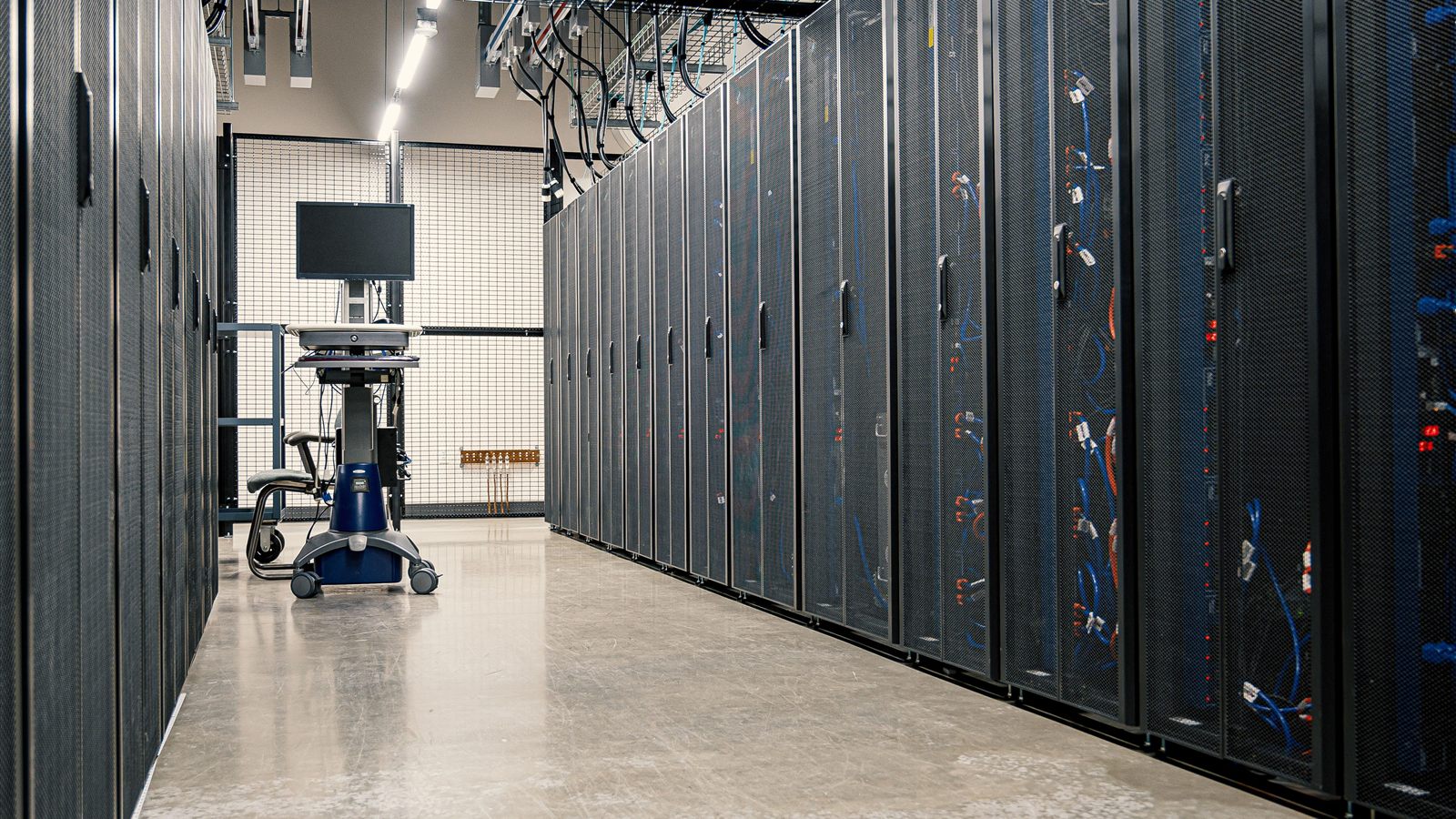
A data center is a facility containing servers, storage, networking and supporting equipment. Servers perform computation. Cooling systems remove heat. Backup power and grid connections help maintain continuous operation. AI is not the only workload inside data centers—websites, streaming, business software, cloud storage and ordinary internet services also depend on them—but rapid AI deployment is increasing demand for high-performance accelerated computing.
The International Energy Agency estimated that data centers used about 415 terawatt-hours of electricity globally in 2024, around 1.5% of global electricity consumption. The IEA projected that data-center electricity demand could more than double by 2030. These are modeled estimates, not a meter attached to “AI” alone, and projections depend on adoption, efficiency, hardware, energy supply and other uncertain factors.
The U.S. picture is especially significant. A Lawrence Berkeley National Laboratory analysis released by the Department of Energy estimated that data centers consumed about 176 TWh in 2023, approximately 4.4% of U.S. electricity. Its 2024 report projected a wide 2028 range of 325 to 580 TWh, or roughly 6.7% to 12% of U.S. electricity. A later 2025 update continued to show strong growth while emphasizing uncertainty.
The width of the range is not a reason to ignore it. It is a reason to avoid presenting the upper bound as a guaranteed future.
U.S. data-center electricity: history and scenarios
2014: approximately 58 TWh
2023: approximately 176 TWh
2028 projection: approximately 325–580 TWh
The projection is a scenario range, not a promise that demand will reach either endpoint. It covers data centers broadly rather than offering a clean measurement of generative AI alone.
Source: U.S. Department of Energy and Lawrence Berkeley National Laboratory.
Why a modest global share can create a major local problem
“Only a few percent of global electricity” can sound reassuring. Global averages hide concentration.
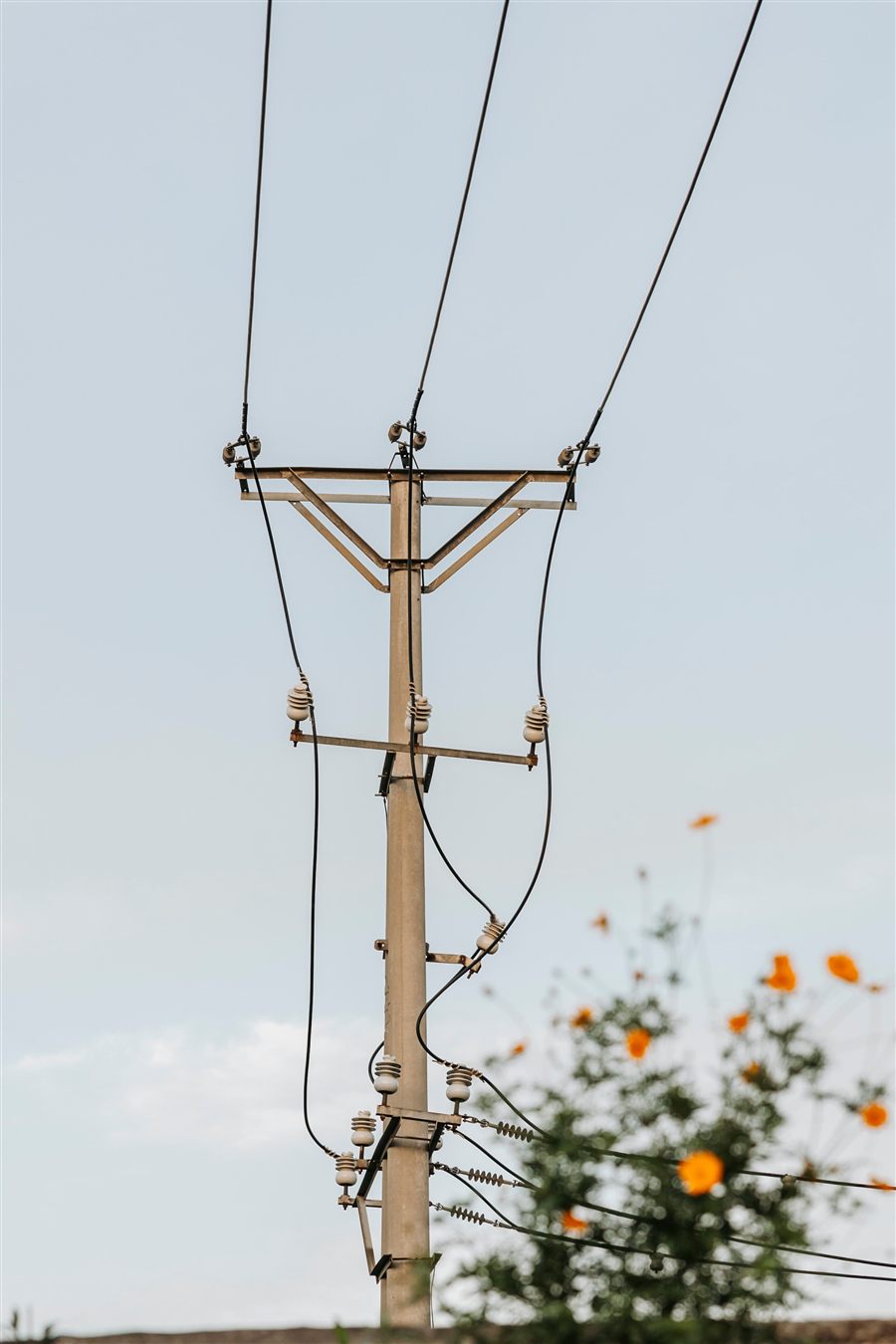
Data centers are not evenly sprinkled across the planet. They cluster where land, network connections, permits, tax arrangements, skilled labor and power are available. A facility—or a group of facilities—can represent a large new load for one utility territory. That can create questions about generation, transmission, interconnection, reliability and who pays for upgrades.
The IEA notes that AI-focused data centers can draw power at the scale of energy-intensive industrial facilities while being geographically concentrated. A national percentage therefore cannot answer a local affordability or reliability question.
The useful local questions are specific:
- What is the facility’s expected peak demand, not only its annual consumption?
- Will new generation or transmission be required?
- How will infrastructure costs be allocated between the operator and other ratepayers?
- What backup generation will be installed, and how often may it run?
- Are efficiency, load flexibility or clean-energy commitments enforceable?
- What happens if the project expands beyond its initial phase?
Those questions do more than a viral comparison between a data center and an entire city, especially when the comparison omits time, location, load profile or source.
Water claims need location and definitions
Servers generate heat. Some data centers use water directly in cooling; others rely more heavily on air cooling or closed-loop systems. Electricity generation can also have an indirect water footprint. Climate, facility design, workload, time of day and local water supply all matter.
The U.S. Government Accountability Office concluded in 2025 that generative AI uses significant energy and water resources but that environmental effects remain difficult to quantify because companies generally do not report the necessary detail. Estimates of water use for individual AI interactions rely on assumptions and can vary.
That uncertainty should not be translated into “there is no problem.” It should be translated into a demand for better disclosure.
When reading a claim about AI water use, ask:
- Does it describe model training, everyday inference or the entire data center?
- Is the water withdrawn, consumed or returned?
- Does it include water used to generate electricity?
- What location, climate and cooling design does it assume?
- Is it a measured company figure or a modeled estimate?
One “bottle of water per conversation” headline may be memorable, but it is not a universal physical constant. The more responsible conclusion is that public and local decision-makers need facility-level reporting that can be compared with available water supplies and competing uses.
Efficiency is real—and it does not settle the question
Computing hardware and data-center operations can become more efficient. The IEA reports rapid reductions in energy use per AI task. But falling energy per task can coexist with rising total energy use when the number and intensity of tasks grow faster.
This is sometimes described as a rebound effect: efficiency reduces the cost of an activity, encouraging more use. It does not mean efficiency is pointless. Without efficiency, total demand could be higher. It means efficiency alone cannot guarantee that absolute consumption falls.
Both of these statements can be true:
- A modern AI system can perform a task more efficiently than an earlier system.
- The expanding AI ecosystem can consume more total electricity than before.
A serious discussion needs both.
Job fear: exposure is not the same as disappearance
AI can automate tasks, reorganize jobs, change entry paths and alter who captures the value of work. None of that is comforted away by saying previous technologies created new occupations.
At the same time, occupational “exposure” does not mean that every exposed job disappears. The International Labour Organization reported in 2025 that one in four jobs worldwide had some potential exposure to generative AI, while transformation was more likely than complete replacement. Its 2026 review of emerging empirical evidence found that large-scale displacement remained limited so far, with uneven productivity effects and risks involving inequality, younger workers, autonomy and job quality.
“So far” matters. Early evidence is not a forecast of the entire transition. It does, however, challenge two exaggerated claims: that nothing important will change, and that the end state is already known.
For an individual worker, the useful questions are closer to the job:
- Which tasks are already being changed?
- Is AI increasing capacity or simply increasing expected output?
- Who is responsible when an AI-assisted result is wrong?
- Are junior tasks disappearing before new training paths exist?
- What data may employees enter into approved tools?
- Is productivity being shared through pay, time or improved work—or only captured as more workload?
Learning to use a tool may be sensible. Workers also need organizational clarity, training, due process and a voice in deployment. Personal adaptability is not a substitute for responsible management.
The quieter fear: losing the experience of doing
Some AI anxiety is not about employment. It is about agency.
Writing, searching, remembering, drawing, planning and problem-solving can be inefficient. That inefficiency is sometimes where judgment develops. If a tool supplies the first idea, the structure, the wording, the critique and the final polish, a person may finish faster while having fewer encounters with uncertainty.
This does not mean assistance makes a skill disappear. Calculators did not eliminate mathematics, and spellcheck did not eliminate writing. Outcomes depend on what is delegated, when, why and whether the person can evaluate the result.
A useful boundary is to distinguish friction that is merely administrative from friction that produces capability.
| Task | AI may help with | Keep human ownership of |
|---|---|---|
| Writing | Formatting, alternatives, mechanical review | Purpose, claims, sources, voice and accountability |
| Research | Search terms, organization, questions | Reading primary sources and verifying facts |
| Planning | Options, checklists, schedules | Values, tradeoffs and final decisions |
| Personal reflection | Prompts and reframing | Private experience, relationships and meaning |
The table is a decision framework, not research evidence. The right boundary changes with the stakes and the person’s goals.
Privacy begins before the prompt is sent
An AI interface can feel like a private conversation even when it is a commercial service governed by data practices, account settings and organizational agreements. Do not assume that a warm conversational style means confidentiality.
Before entering information, remove what the task does not require. Avoid pasting passwords, authentication codes, financial records, health information, legal documents, confidential workplace material or identifiable details about another person unless you understand the service, authorization and consequences.
For workplace AI, follow the organization’s approved-tool and data policies. For high-stakes medical, legal, financial or employment decisions, use qualified professionals and authoritative sources rather than treating a generated answer as the decision-maker.
Privacy risk is not solved by personal caution alone. Product defaults, retention, training practices, security, procurement and regulation matter. But a pre-prompt pause can still prevent unnecessary disclosure.
How to read AI-and-data-center headlines without becoming numb
The subject invites dramatic units: cities, swimming pools, countries, household equivalents and percentage increases from small baselines. Some comparisons are legitimate explanatory tools. Others travel farther than their assumptions.
Use a six-question check:
- What is being measured? AI, all data centers, one model, one facility or a hypothetical query volume?
- Is the figure measured or modeled?
- What year and location does it describe?
- Is it annual energy, peak power, water withdrawal, water consumption or emissions?
- Is the comparison a historical figure, a base case or an upper scenario?
- What decision would this number help someone make?
If an article cannot answer those questions, it may still identify a legitimate issue, but its most memorable number should not become your conclusion.
What you can control, influence and only monitor
AI anxiety becomes more workable when actions are sorted by level.
Control
- Whether you use AI for a particular task.
- What personal or confidential information you enter.
- Which skills you continue to practice without assistance.
- Whether you verify important claims and disclose meaningful AI use.
- How much AI news you consume after you understand the development.
Influence
- Your workplace’s rules, training, procurement and accountability.
- A school or family’s boundaries around AI-assisted work.
- Community meetings, utility proceedings and local planning decisions.
- Requests for transparent environmental reporting and cost allocation.
Monitor
- National employment trends.
- Long-range electricity-demand scenarios.
- Model capabilities and corporate investment.
- Regulatory and technical developments outside your immediate role.
Monitoring is legitimate. It becomes unhelpful when it impersonates action and occupies every spare moment.
An AI boundary that is neither refusal nor surrender
Try a written use policy for yourself:
- Name the task. What specific outcome do I want?
- Set the delegation line. Which part can the tool assist, and which part must remain mine?
- Remove sensitive detail. What does the prompt not need?
- Define verification. Which claims, sources or calculations must be checked elsewhere?
- Choose an endpoint. When is the tool finished rather than becoming another open feed?
For example: “I will use AI to generate interview-practice questions. I will answer them myself, verify any factual feedback and stop after thirty minutes.” That is more useful than declaring yourself “pro-AI” or “anti-AI.”

When concern turns into an endless AI feed
AI news is unusually good at generating more AI news. A model release produces demonstrations, reactions, rebuttals, predictions and predictions about the predictions. Data-center announcements become maps, rumors and numerical comparisons. The feed can leave a reader feeling simultaneously informed and unable to state what changed.
Choose a cadence that matches your role. A person responsible for AI procurement may need frequent updates. Most readers do not need hourly capability videos or every speculative employment forecast.
Use a source stack: one primary report, one reliable newsroom or specialist publication and one local source when infrastructure affects your community. Write down the next date you will check. If nothing actionable changes, close the loop.
The Free 10-Minute Phone Urge Reset can help interrupt a fear-driven checking session. It does not solve data-center policy, protect a job or treat anxiety. Its purpose is narrower: to create enough offline space to decide whether the next scroll is research, action or repetition.
What responsible calm looks like
Calm is not certainty that everything will be fine. It is the ability to keep scale, evidence and agency in view.
A responsible position can hold several truths:
- AI can provide useful assistance and create serious risks.
- Data centers are essential digital infrastructure and can impose significant local costs.
- Efficiency improvements matter, while total demand can still grow.
- Job transformation is already occurring, while the long-term employment outcome remains uncertain.
- Individuals have meaningful choices, while institutions hold far more power over infrastructure and deployment.
You do not have to reduce that complexity to a slogan.
Frequently asked questions
Is every AI prompt bad for the environment?
Every digital computation uses physical infrastructure, but the impact of one prompt varies by model, hardware, data center, energy supply, response length and other factors. Reliable service-specific figures are often unavailable. Avoid treating one modeled estimate as universal, and focus on purposeful use and demands for better disclosure.
Will data centers make electricity more expensive?
The answer depends on the regional grid, new generation and transmission, utility regulation, contracts and how infrastructure costs are assigned. Large new loads can create costs, but a national average cannot predict a specific customer’s bill. Local utility filings and regulatory proceedings are more relevant than generic claims.
Should I stop using AI because of data centers?
That is a values decision, not a conclusion the available data can make for everyone. Individual restraint may align with your priorities, but infrastructure outcomes also depend on corporate choices, procurement, regulation, utility planning and the scale of deployment. Use the tool deliberately and support transparency at the level where decisions are made.
Is AI anxiety a medical condition?
Concern about a consequential technology is not automatically a disorder. Research on “AI anxiety” is developing and varies by population. If fear is persistently disrupting sleep, work or daily functioning, a qualified healthcare professional can provide individualized support. This article is educational and does not diagnose or treat anxiety.
The machine is physical. Your attention is, too.
AI is not magic in the cloud. It is software running on machines, inside facilities, connected to power and water systems, governed by people and institutions. Its effects will not be decided by technology alone.
Your response does not have to be magical either.
Identify the fear. Find its scale. Ask for the right evidence. Protect private information. Keep ownership of the skills and decisions that matter. Participate locally when infrastructure decisions are local. Prepare for changes in work without pretending the future is already settled.
Then step away from the feed long enough to return to the part of the problem that is actually yours.